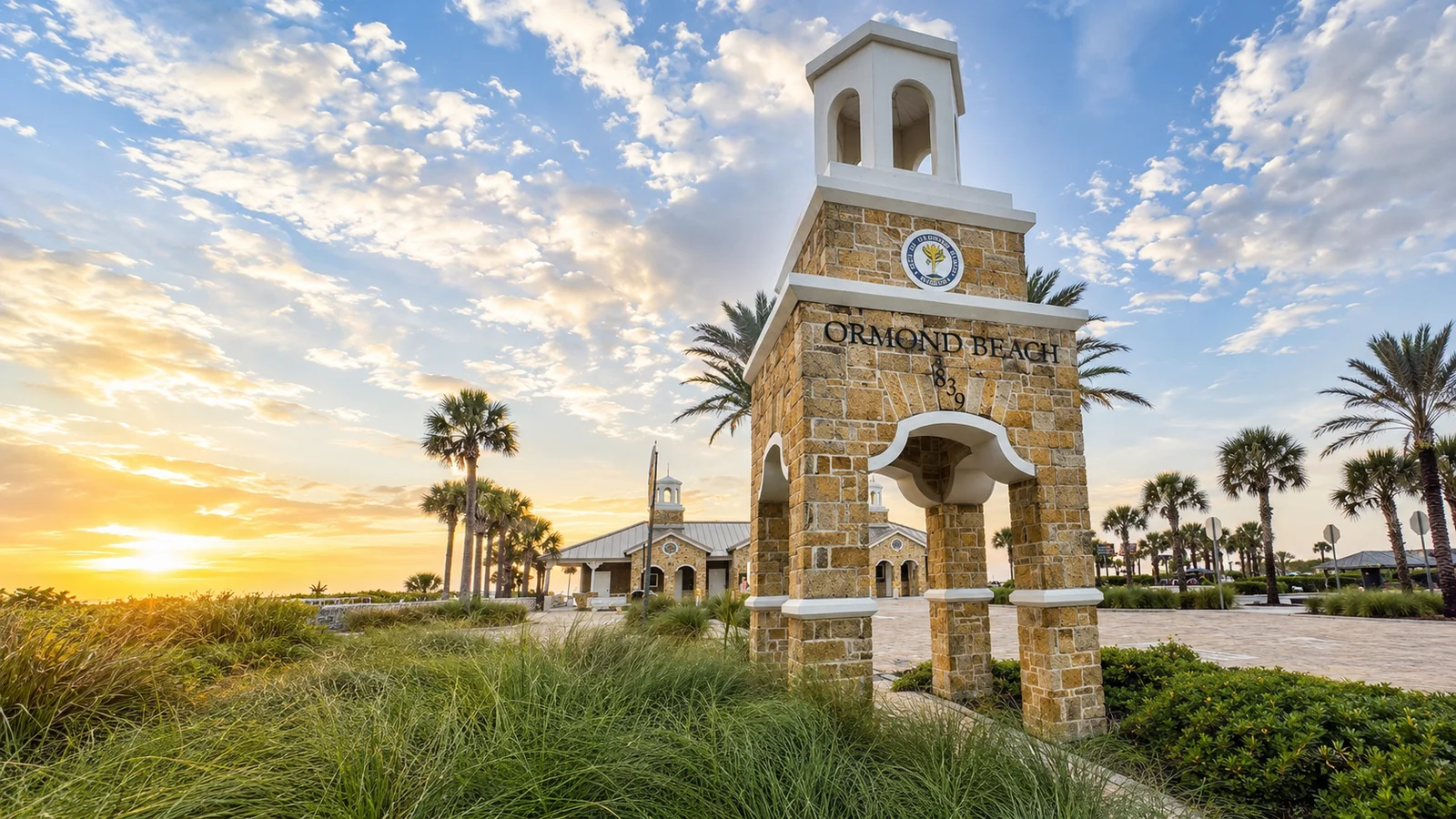
Ormond Beach has a way of winning people over quietly. It sits on Florida’s Atlantic coast in Volusia County, just north of Daytona Beach, and it feels noticeably calmer than its better-known neighbor. Joe grew up here, Eileen has lived here for 25 years, and between us we have watched a lot of people arrive for a visit and start looking at homes before they leave. If you are considering the same, here is what we would want a friend to know first.
Beachside, mainland, and everything in between
The Halifax River runs through Ormond Beach, and the town’s neighborhoods sit on both sides of it. Beachside, east of the river, you are close to the ocean and the beach approaches, with a mix of older cottages, mid-century homes, and newer construction. On the mainland, west of the river, you will often find larger lots, established subdivisions, and neighborhoods that feel more residential and tucked away.
Neither is better; they are just different. Buyers who want to walk or bike to the beach often lean beachside and accept a smaller footprint. Buyers who want a bigger yard, a garage for the boat, or a quieter street often look west. We encourage people to spend real time in both before deciding, ideally at different times of day. The right answer usually becomes obvious once you have driven both routes home a few times.
Coastal homes ask a few extra questions
Buying near the coast is not complicated, but it does add some items to your list. Buyers should review insurance, property condition, and location-specific considerations such as flood-zone designation and elevation as part of their due diligence, because these can vary from property to property. Ask early, not after you are under contract, so nothing comes as a surprise.
Roof age and construction details are worth understanding early. They can factor into inspections and insurance reviews, and they tell you a lot about how a home has been maintained. Joe’s background as a certified roofing contractor and licensed building contractor is something we lean on constantly in Ormond Beach: he looks at roofs, soffits, windows, and how a home is built the way an inspector would, and he does it during the showing rather than after you have fallen in love with the kitchen.
- Ask about the roof’s age, material, and whether there is documentation of any replacement or repair.
- Ask whether the home has had a wind mitigation inspection, and request the report if it has.
- Ask about the flood-zone designation and any insurance considerations specific to the property.
- Look for signs of past water intrusion, and ask about any storm-related damage and repairs.
Established neighborhoods, established character
One of the things people appreciate about Ormond Beach is that so much of it is already built. That means mature trees, homes with some history, and neighborhoods where the character is settled rather than still under construction. It also means you will encounter a range of ages and conditions, from lovingly updated homes to ones that need real work.
Some neighborhoods have homeowners associations and some do not, and the difference affects everything from what you can park in the driveway to how the common areas are maintained. Neither is right or wrong, but it should match how you want to live. If you value freedom to do your own thing, ask about deed restrictions before you get attached. If you value consistency and shared amenities, an HOA community may be exactly what you want.
Lifestyle: what daily life actually looks like
Ormond Beach is a place where people go to the beach on a Tuesday, spend Saturday morning at a local breakfast spot, and know their neighbors. There are parks and riverfront spaces, a downtown stretch with local shops and restaurants, and the rest of Volusia County close by. Daytona Beach is immediately to the south, and Interstate 95 runs through the area for trips farther afield.
If you are relocating from out of state, budget some time to visit in more than one season. Summer and winter feel different here, and so does the pace. Buyers who visit only in the busiest part of the year sometimes underestimate how quiet it can become, and buyers who visit only in the off-season sometimes underestimate how busy the beachside can be when events are in town.
Getting your numbers straight before you look
Because coastal homes can carry additional insurance and maintenance considerations, it is worth getting a realistic sense of your total monthly cost early, not just the mortgage payment. Our home affordability calculator is a good place to start thinking about the purchase price range, and a conversation with a local lender and insurance agent will fill in the rest. We are happy to point you toward people we trust.
How we help
We work with buyers in Ormond Beach the way we would want to be treated ourselves: an honest conversation about what you are looking for, showings that respect your time, and straight talk about each home’s condition and value. Whether you are a first-time buyer, moving in from another state, or coming home after years away, we would be glad to help you find your footing here. When you are ready to start, reach out and tell us what you have in mind.